Est. 1848 — Queensland's Burnett Region
Heritage & Mystery Portal
Step into the museum archive. Uncover ghost stories whispered through the gums, homesteads standing against time, and the colonial characters who built this land.
The Heritage Vault
Ancestral Lands
Wakka Wakka & Gubbi Gubbi — 60,000 years of deep history.
Museums
The Burnett Museum Trail — dusty relics & living history.
Statues & Memorials
Kingaroy Peanut Silos, bronze pioneers, and war memorials.
Historical Sites
Ruins, homesteads like Boondooma, and old railway bridges.
Colonial Experience
Blacksmithing, laundry days, and slab-hut living.
Early Settlers
The founding families of the 13 major Burnett towns.
Colonial Characters
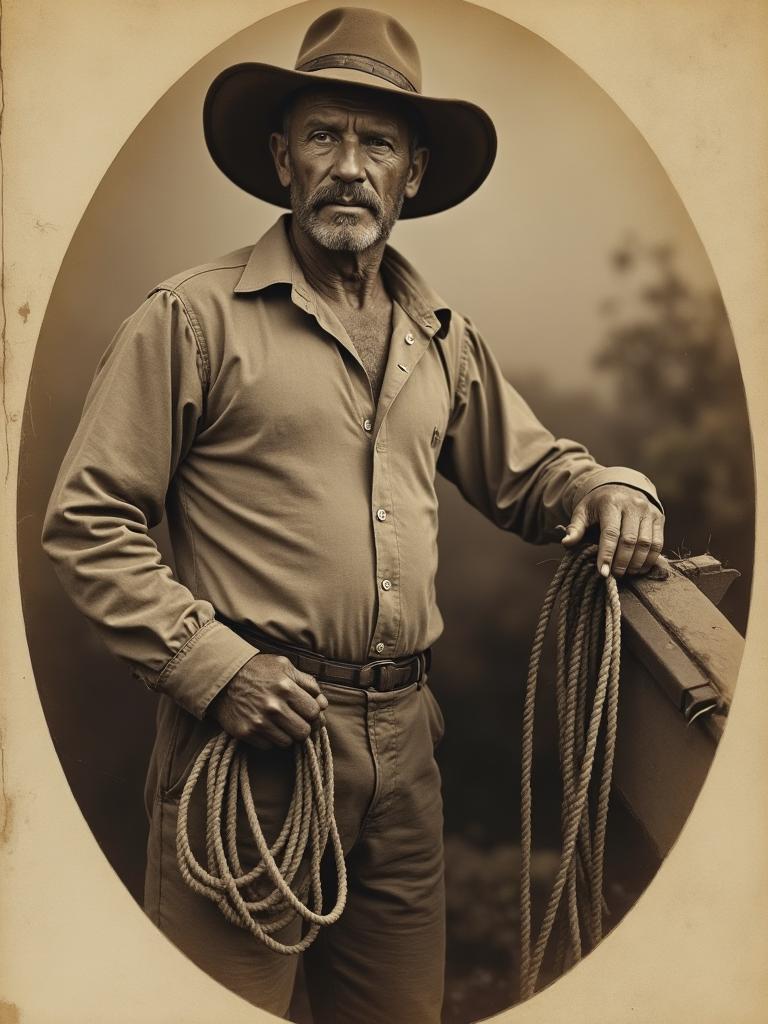
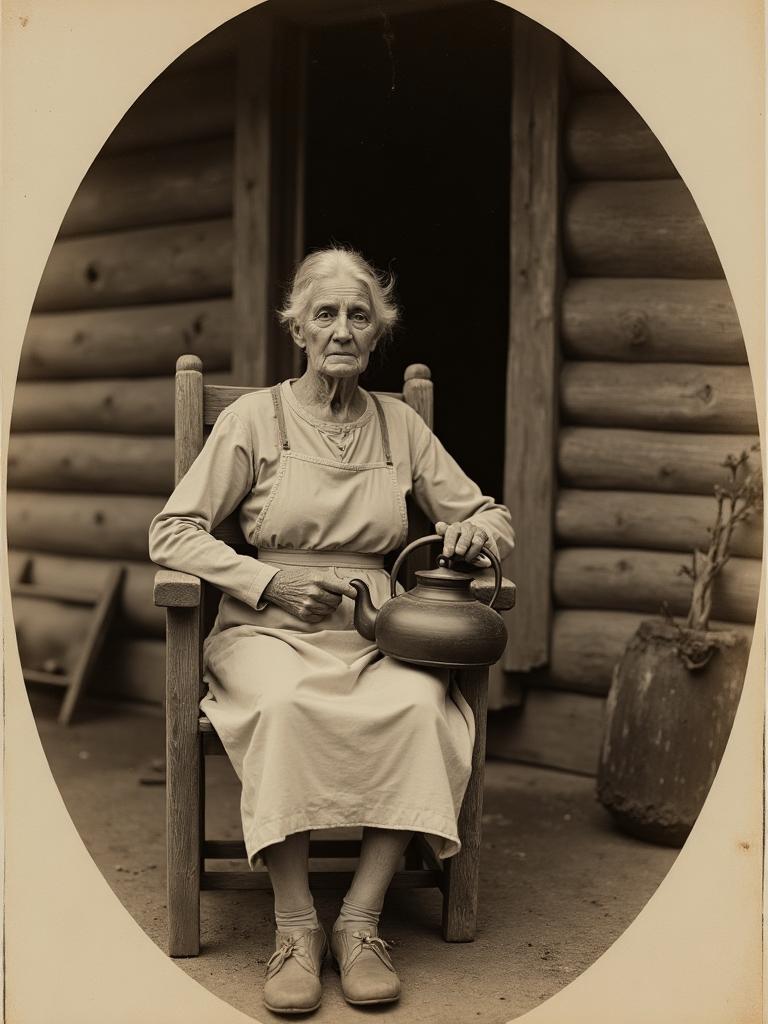
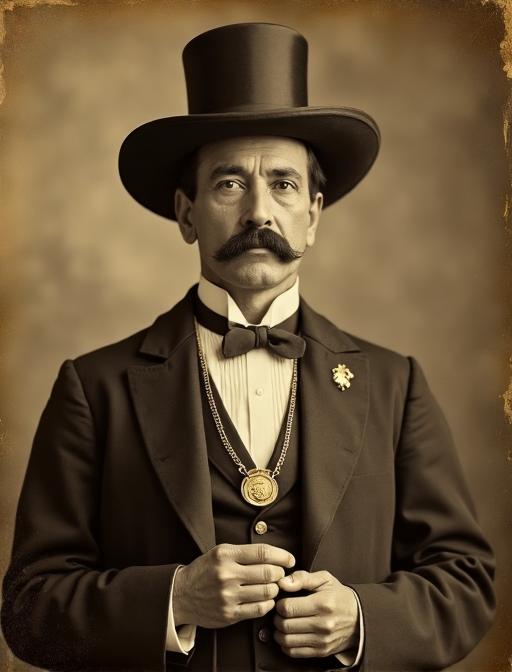
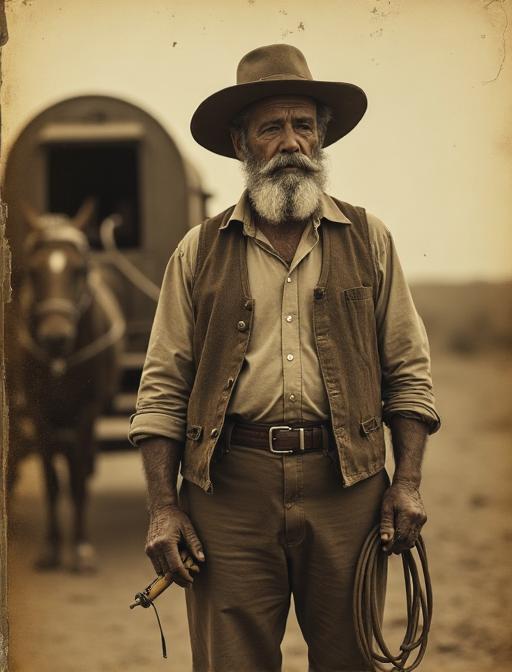
A Portrait Gallery of famous Burnett figures.
Tales & Mystery
Ghost stories, legendary creatures, and the Great Cattle Theft.
The Lost Map
Ghost towns & vanished settlements like old Paradise.
Ancestral Lands
We acknowledge the Wakka Wakka, Gubbi Gubbi (Kabi Kabi), Butchulla, and Jarowair peoples as the Traditional Custodians of this land. Their connection to Country stretches back over 60,000 years — the deepest chapter in the Burnett's story.
The Four Nations of the Burnett
Four distinct peoples, one interconnected landscape
Wakka Wakka
Burnett River heartland — Gayndah, Mundubbera, Eidsvold, Ban Ban Springs, Cherbourg (Barambah)
Gubbi Gubbi (Kabi Kabi)
Southern reaches — from the Blackall Range through to the southern Burnett foothills
Butchulla
Eastern coast and hinterland — Fraser Island (K'gari) and the coastal Burnett fringe
Jarowair
Western highlands — Bunya Mountains and the Darling Downs interface
Sacred Sites & Significant Places
Select a site to explore its story
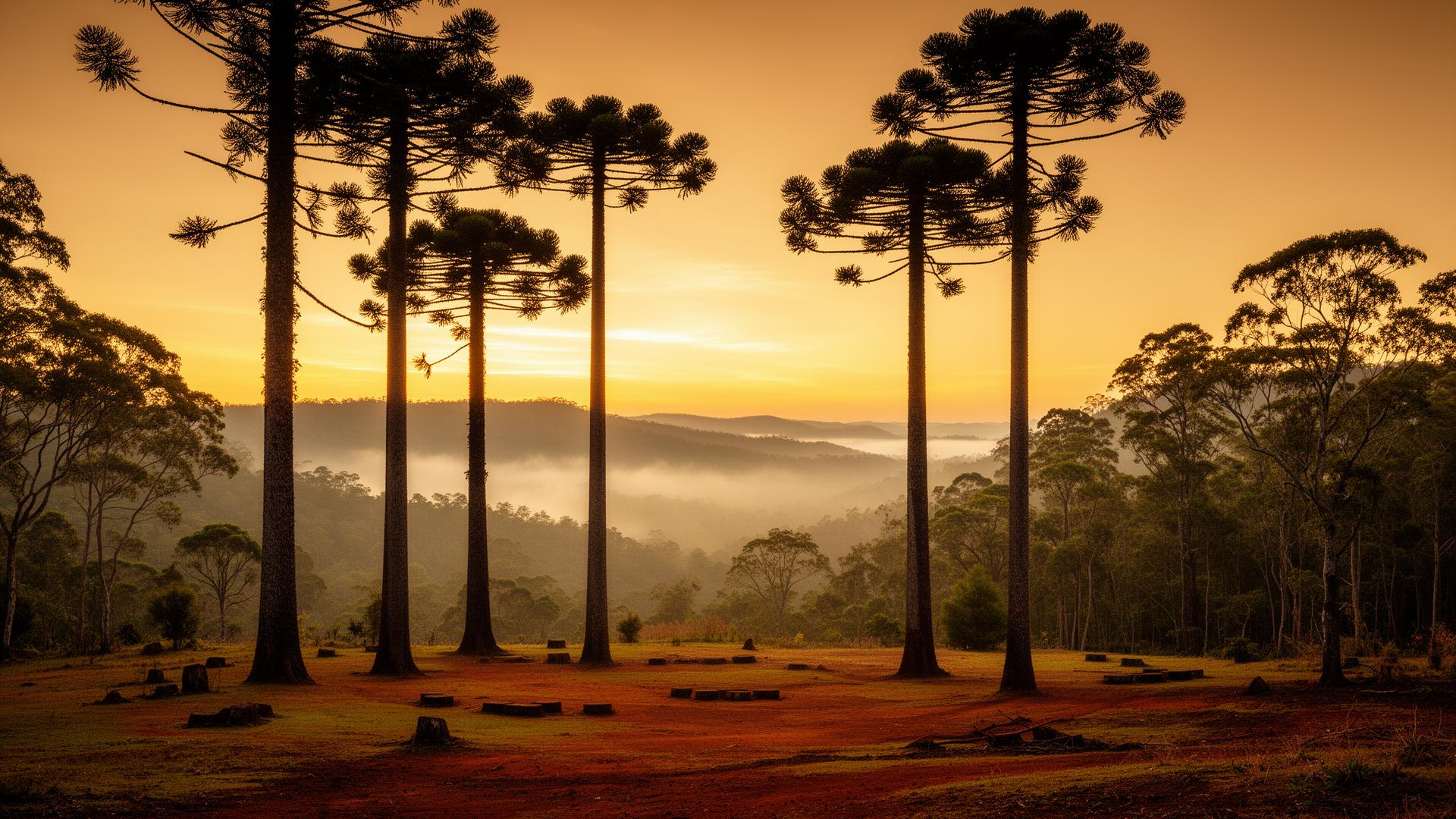
Bunya Mountains (Booburrgan Ngmmunge)
"Booburrgan Ngmmunge — Mother's Breast, place of sacred nourishment"
Every three years, when the giant Bunya pines bore their enormous cones, up to 10,000 Aboriginal people from across eastern Australia journeyed here for the greatest peaceful gathering on the continent. The Bunya Pine was revered as a 'Mother Spirit' — its nuts eaten raw, roasted, or ground into nyangti (flour). Marriages were arranged, disputes settled, songs exchanged, and trade conducted in what was, in effect, a 'Parliament of the Scrub.'
The Bunya Calendar
The three-year cycle that governed the greatest gathering on the continent
Year 3 — Harvest
The great cones ripen and fall. Up to 10,000 people converge on the mountains. Weeks of feasting, ceremony, diplomacy, and trade — the Parliament of the Scrub.
Living Traditions
The Bunya Dreaming festivals have been revived by community elders working to reconnect younger generations with the ancient gathering traditions. These modern celebrations honour the original spirit of the Bon-yi — a place where all are welcome, where stories are shared, and where the Bunya pines still fruit as they have for thousands of years.
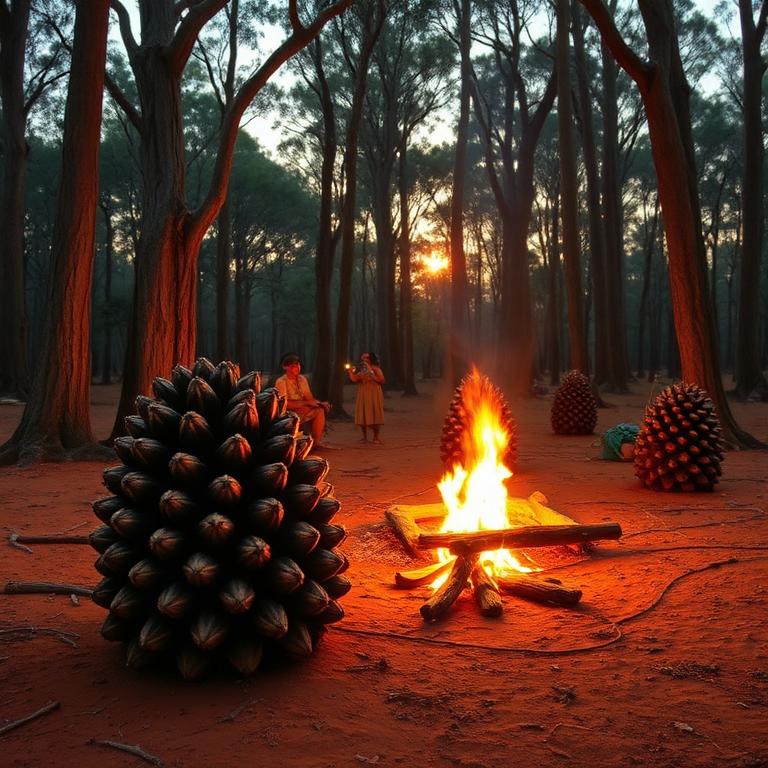
The Great Bunya Gathering
Bon-yi — The Parliament of the Scrub
Every three years, when the giant Bunya pines (Araucaria bidwillii) bore their enormous cones — some weighing up to 10 kg — thousands of Aboriginal people from the Wakka Wakka, Gubbi Gubbi, Butchulla, and Jarowair nations, along with neighbours from as far as New South Wales, converged on the Bunya Mountains.
The Bunya Pine was revered as a "Mother Spirit." The nuts were a sacred food — eaten raw, roasted, or ground into nyangti (flour). Clans who were otherwise enemies laid down their weapons and feasted together beneath the ancient trees.
The gathering was far more than a feast — it was the original social network of the Burnett. Marriages were arranged, disputes settled, songs and stories were traded, and law was made. It was, by every measure, a Parliament.
European settlers marvelled at the scale: some estimated 10,000 people gathered in peace. Governor Gipps proclaimed the forests protected in 1842 — one of Australia's first conservation acts. But settlement encroached, and the great gatherings faded. The Bunya pines still stand, still fruit, still wait.
10,000+
Attendees
4+
Nations
Weeks
Duration
1842
Protected
The Language of the Land
The towns you know today carry names with 60,000 years of meaning
Bunya Mountains
"Booburrgan Ngmmunge"
Meaning: Mother's Breast / sacred nourishment
Wakka Wakka / Jarowair
Gayndah
"Gu-yan-dah"
Meaning: Thunder
Wakka Wakka
Mundubbera
Meaning: Footsteps in the trees / meeting place
Wakka Wakka
Ban Ban Springs
"Ban Ban"
Meaning: Grass
Wakka Wakka
Nanango
Meaning: Small water / little creek
Wakka Wakka
Murgon
Meaning: Lily pond
Wakka Wakka
Kingaroy
Meaning: Place of red ants
Wakka Wakka
Wondai
Meaning: Possums are here
Wakka Wakka
Cherbourg
"Barambah"
Meaning: Meeting of the waters
Wakka Wakka
Burnett River
"Mundagurra's Path"
Meaning: Rainbow Serpent's track
Wakka Wakka
"We pay our respects to Elders past, present, and emerging. We honour the Wakka Wakka, Gubbi Gubbi, Butchulla, and Jarowair peoples' enduring connection to Country — their land, waters, and culture. This land was never ceded. Sovereignty was never surrendered."
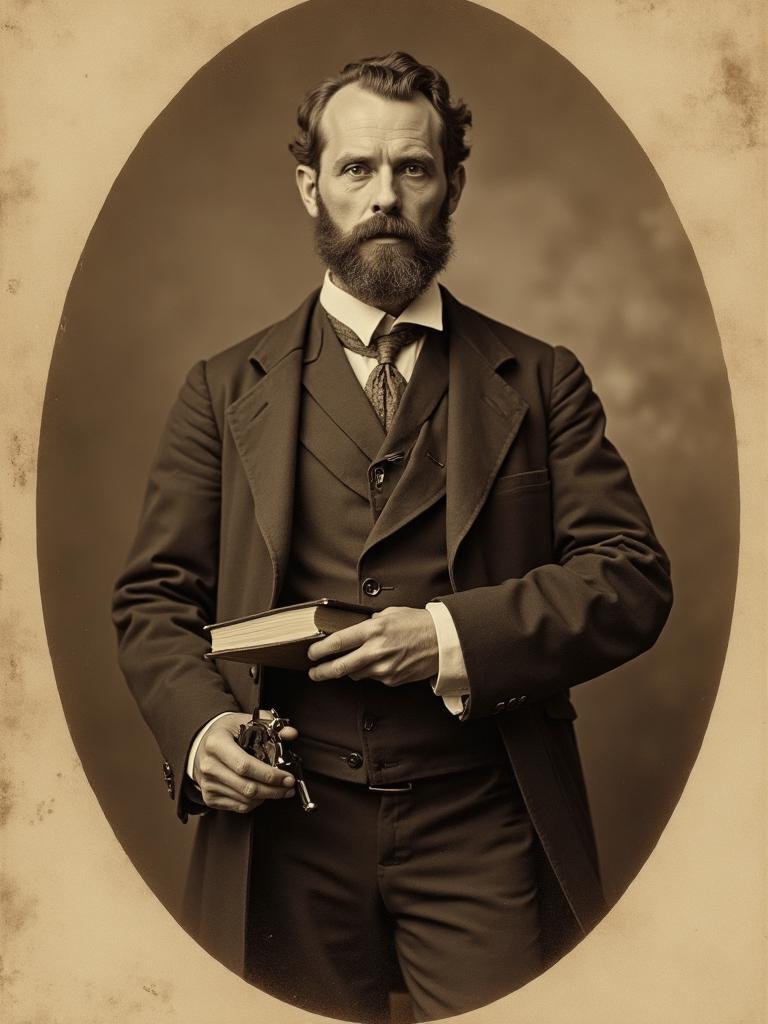
The Portrait Gallery
Hover to reveal their stories. Click the artifact to uncover a mystery.
👻 Tales & Folklore
Shadows of the Burnett
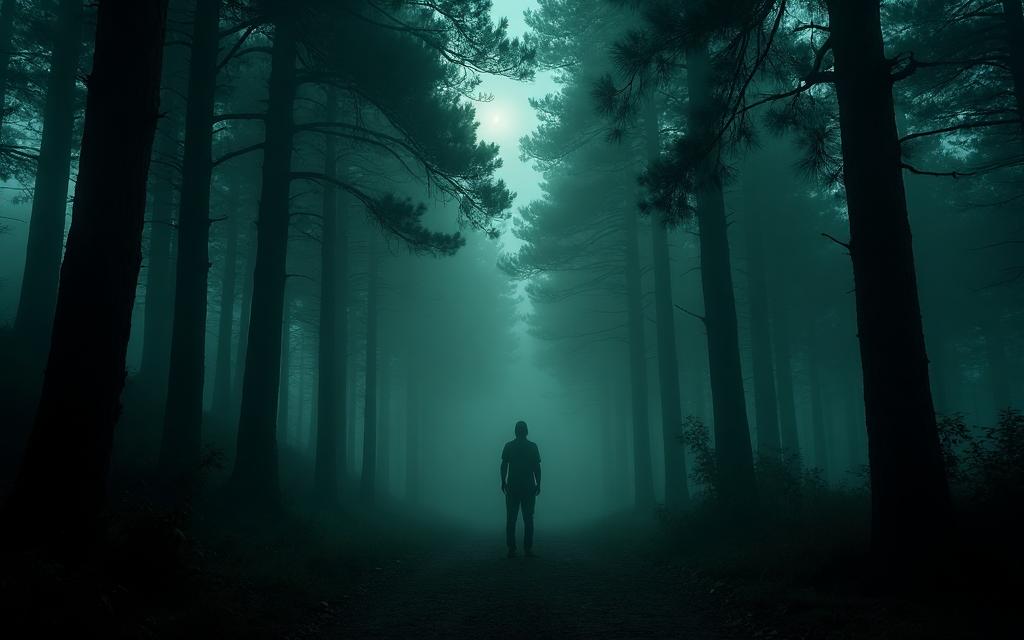
The Sentinel of the Bunyas
The LegendLong before the tourists arrived, the Bunya Mountains were a sacred meeting ground for the Wakka Wakka and neighbouring tribes. But colonial loggers spoke of a different presence — the 'Dark Sentinel.'
On misty nights when the ancient Bunya pines groan in the wind, hikers report seeing a towering, shadow-like figure moving between the trees. It leaves no footprints and makes no sound. Legend says it is a guardian spirit protecting the ancient groves from those who seek to harm the mountains.
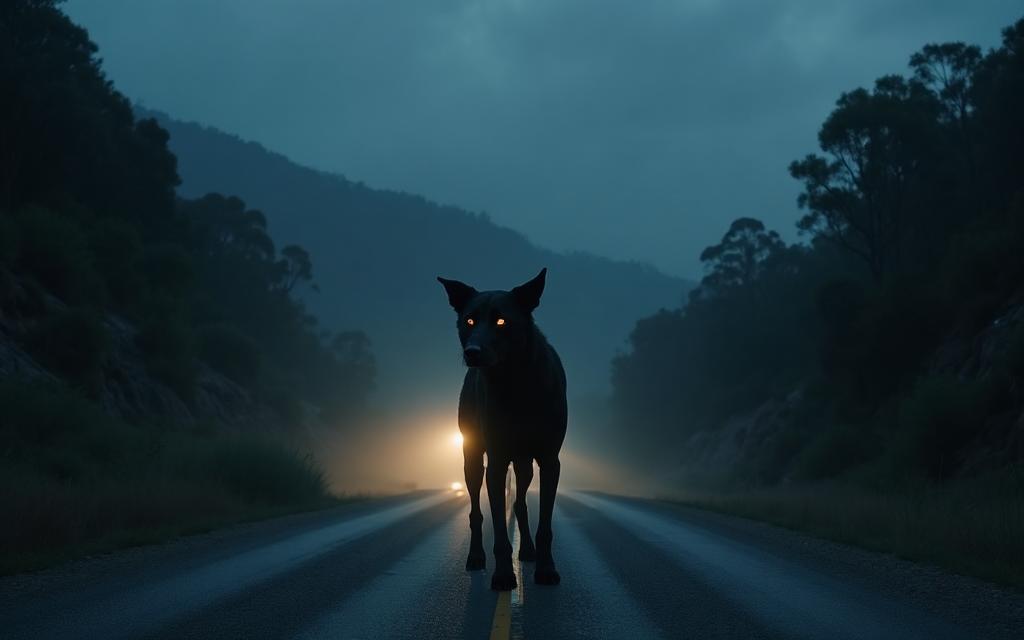
The Black Dog of Mount Perry
The LegendA classic piece of North Burnett folklore, seen by miners and explorers for over a century.
Travellers navigating the winding roads near Mount Perry at dusk have reported a massive, jet-black hound with glowing amber eyes appearing in their rearview mirrors. It follows for exactly one mile before vanishing into the rock face. To see the Black Dog is said to be a warning: 'Slow down, or the mountain will claim you.'
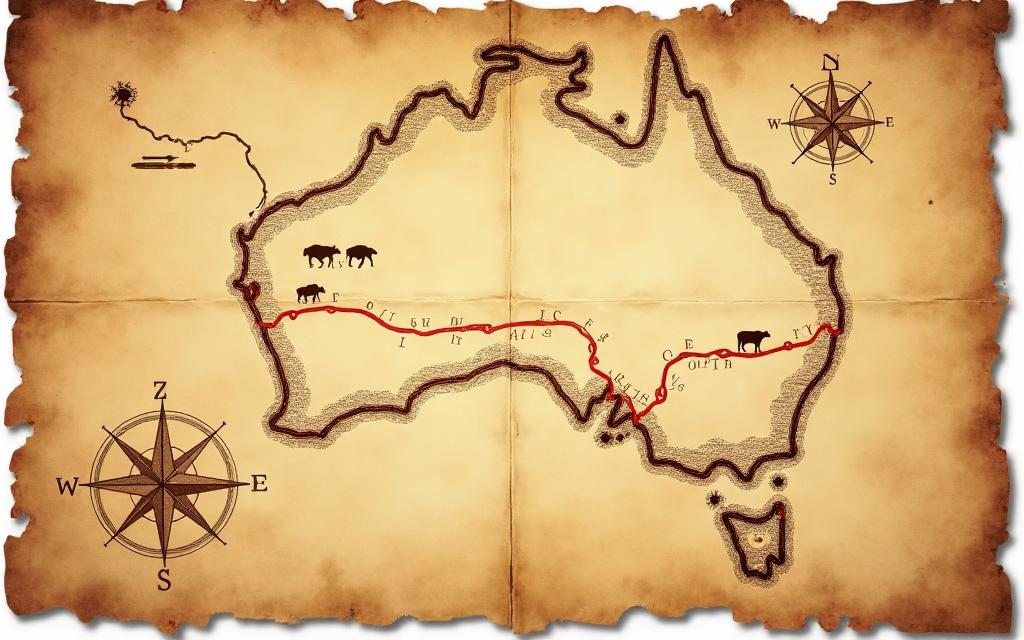
The Great Cattle Theft
The LegendIn the late 1800s, a group of daring 'duffers' known as the Burnett Boys orchestrated a theft that sounds like a movie plot. They didn't just steal a few head of cattle — they mustered a mob of nearly 1,000 head.
Instead of selling locally, they drove the herd over 2,000 kilometres to South Australia, altering the brands with a heated 'scullery brand' so skilfully that even experienced stock inspectors were fooled. By the time the owners realised, the Burnett Boys had sold the mob in the southern markets and disappeared. Some say they returned to the Burnett as 'respectable' men of wealth, their fortunes built on red dust and stolen hides.
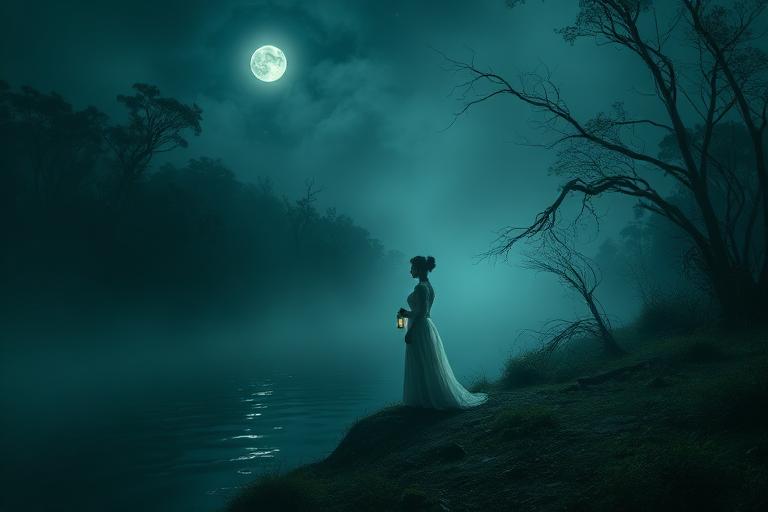
The Weeping Woman of Gayndah
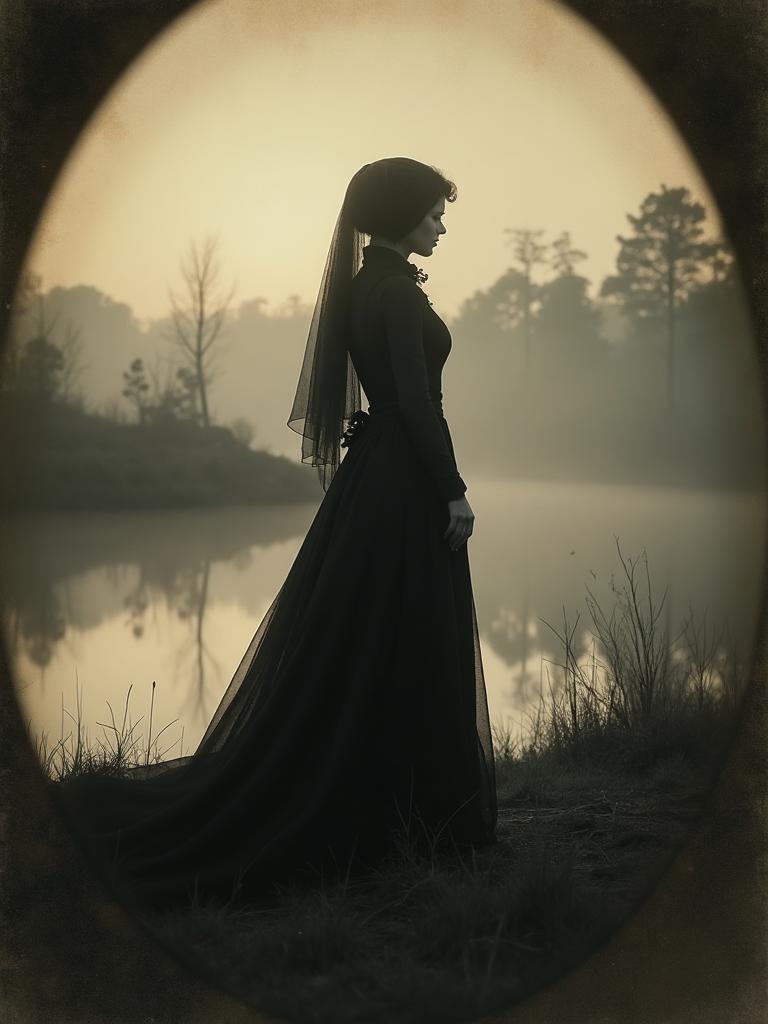
The LegendSince the catastrophic floods of 1893, residents along the Burnett River near Gayndah have reported a sorrowful apparition — a woman in white standing on the riverbank, lantern raised, gazing across the black water.
She appears only when the river is rising, always at the same bend where the old ferry crossing once stood. Witnesses describe the faint glow of her lantern, the sound of quiet sobbing carried on the wind, and the overwhelming scent of river jasmine — a flower that hasn't grown in that stretch for over a century. Old-timers say she is the wife of a station hand who was swept away in the great flood. She waits still, they say, for a husband who will never return from the crossing.
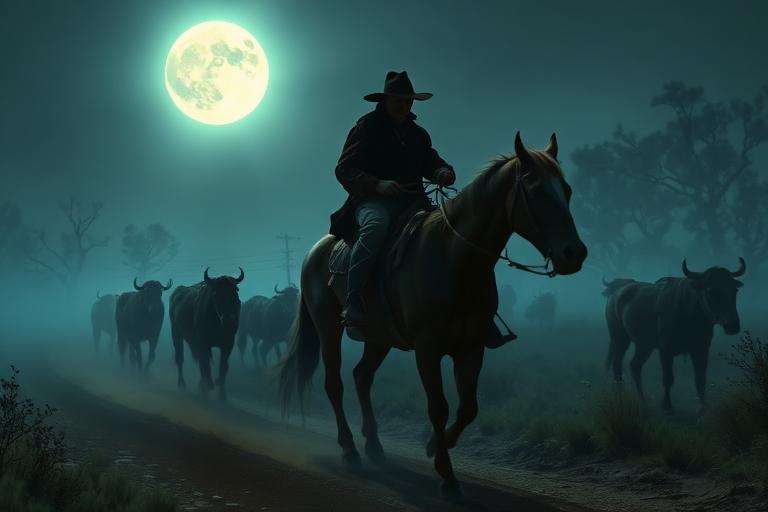
The Phantom Drover
The LegendOn the old stock route between Boondooma and Proston, drovers have reported something inexplicable since the 1890s — the sound of a mob being driven on a road where no cattle walk.
The crack of a stockwhip, the bellow of cattle, the jingle of harness — all heard on windless nights when the moon is full. Those brave enough to ride out find nothing: no tracks, no dung, no broken grass. But the sounds continue, moving steadily south, as though a ghostly mob is being driven by a drover who never reached his destination. The Boondooma Homestead logbooks record a drover named William Holt who left with 400 head in 1891 and was never seen again.

The Rainbow Serpent of the Burnett
The LegendThe Wakka Wakka and Goreng Goreng peoples of the Burnett region share a Dreamtime story of immense power — the Rainbow Serpent who carved the Burnett River and its tributaries into the red earth.
In the Dreamtime, the great serpent Mundagurra slept coiled beneath the plains. When she woke, she was thirsty. She began to move, and wherever her body pressed into the earth, water filled the groove — creating the Burnett, the Auburn, the Boyne. Her scales left behind the coloured clays — red ochre, yellow, white — that the people use for ceremony to this day. Elders warn: the serpent still sleeps in the deepest pools. When the river floods without rain, Mundagurra is turning in her sleep. When she wakes again, the world will be remade.
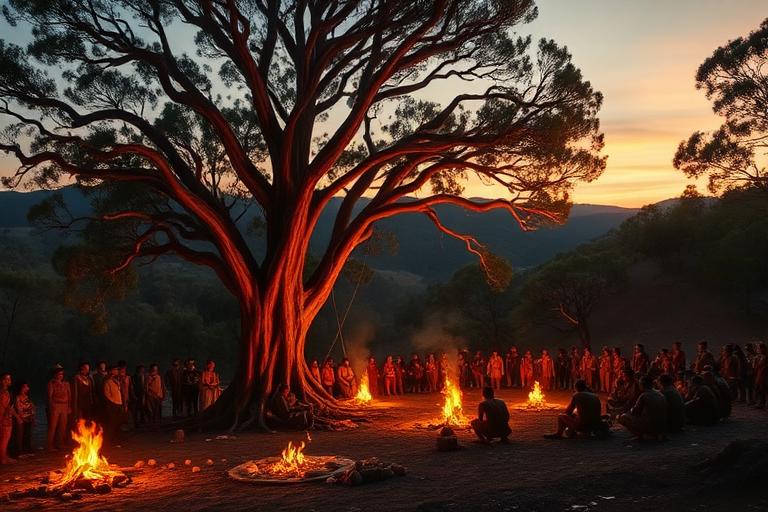
The Great Bunya Gathering
The LegendEvery three years, when the giant Bunya pines bore their enormous cones, thousands of Aboriginal people from across eastern Australia journeyed to the Bunya Mountains for the greatest gathering on the continent.
Clans who were otherwise enemies laid down their weapons and feasted together beneath the ancient trees. Marriages were arranged, disputes settled, songs exchanged, and trade conducted. The Bunya nut — rich, nutritious, and plentiful — sustained the gathering for weeks. European settlers marvelled at the scale: some estimated 10,000 people gathered in peace. Governor Gipps proclaimed the forests protected in 1842 — one of Australia's first conservation acts. But settlement encroached, and the great gatherings faded. The Bunya pines still stand, still fruit, still wait.
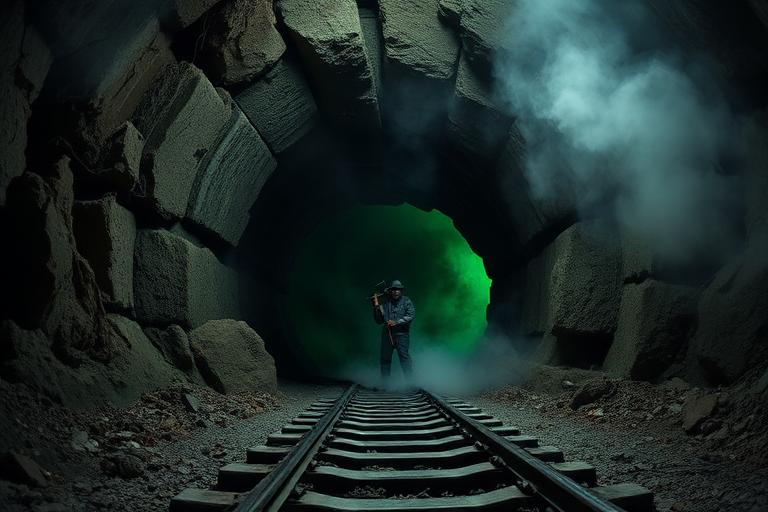
The Knocker of Perry Mine
The LegendMiners at Mount Perry's copper workings reported a persistent, unexplained phenomenon throughout the 1870s and 1880s — a rhythmic knocking from deep within abandoned shafts.
They called it 'The Knocker' — a steady tap-tap-tap echoing from tunnels no man had entered in years. Cornish miners, who brought the tradition from the tin mines of Cornwall, said Knockers were spirits of deceased miners warning of danger. In 1876, a collapse killed three men in Shaft No. 4. Survivors swore the Knocker had been tapping furiously for three days before the cave-in — a warning that went unheeded. The mine was sealed in 1890. Locals say you can still hear the tapping if you press your ear to the ground above the old workings on quiet nights.
🐄 Spot the Brand
The Burnett Boys altered cattle brands with hot wire. Can you spot the duffed brand?
Round 1 of 3
Which brand has been 'duffed' (altered)?
Hidden Tales
Light the Candelabra above to reveal hidden text.
The Phantom Drover of Boondooma
They say on windless nights you can hear the crack of a whip and the bellow of long-dead bullocks on the old Boondooma road. The drover never reached his destination — and never stopped trying.
The Weeping Gum of Childers
A massive ironbark in old Childers cemetery bleeds red sap every August. Old-timers say it marks the anniversary of a murder most foul — committed by someone the town still celebrates.
Ban Ban Springs Boundary Rider
Lost in the 1893 floods, the boundary rider's body was never found. But his horse returned — soaking wet, trembling, and aged 20 years in a single night.
The Lights of Cania Gorge
Bushwalkers camping in Cania Gorge report floating balls of pale blue light drifting through the sandstone corridors after midnight. Aboriginal elders say they are the spirits of ancestors returning to the painted caves — warning visitors not to disturb the ochre hand prints.
The Singing Stones of Eidsvold
A circle of basalt rocks near Eidsvold hums on hot summer afternoons — a low, resonant tone like a didgeridoo. Geologists blame thermal expansion. Wakka Wakka elders say the stones remember the songs that were sung there ten thousand years ago.
The Horseman of Maidenwell
A rider on a white horse has been seen galloping across the plateau at Maidenwell at dawn, always heading west, always vanishing at the tree line. No hoofprints. No horse in the district matches the description. The sightings have continued since 1921.
Ghost Towns & Vanished Places
Some Burnett towns didn't survive. Drowned by dams, cursed by collapsing mines, or ruled by tyrants — these are the places that exist only in memory, old maps, and whispered warnings.
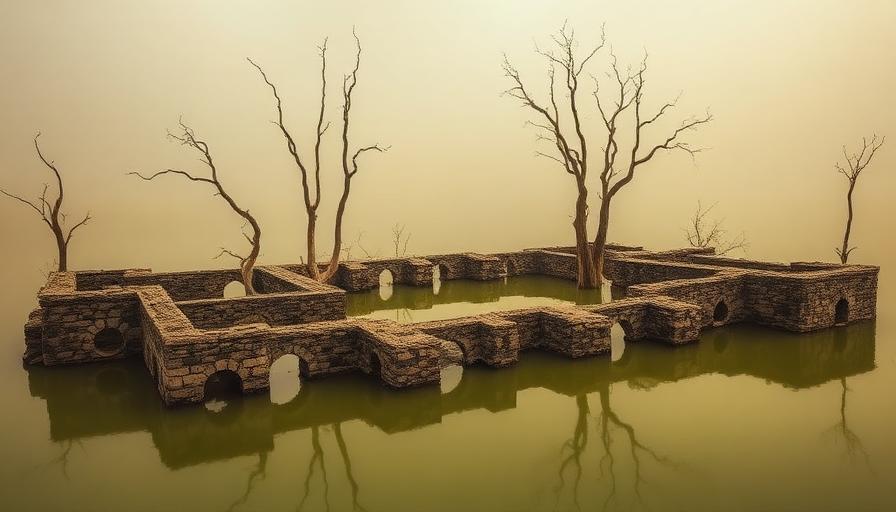
Paradise
c. 1890s
1971
~200
Submerged by Paradise Dam, Burnett River
The History
Once a booming gold town in the 1890s with several hotels and a courthouse, Paradise was eventually abandoned and later submerged by the creation of the Paradise Dam on the Burnett River. Families grew citrus, ran cattle, and sent their children to a one-teacher school. When the dam was approved, residents were given notice to leave. Some dismantled their homes board by board; others simply walked away.
Cause of Disappearance: Inundated when Paradise Dam was constructed. The entire township — houses, fences, orchards — was deliberately flooded.
The Myth — The Bell Beneath the Water
Local fishers and divers claim that during extreme droughts, when the water level drops, the spire of the old church or the tops of the stone chimneys break the surface. Old-timers say you can still see the chimney stones when the water drops below 15%.
The Tale — The Hermit Who Never Left
Legend says the town was never truly emptied. Before the flooding, a local hermit refused to leave his hut. Some say on quiet, misty mornings on the dam, you can hear a faint dinner bell ringing from beneath the dark water — the hermit calling out to a world that forgot him.
Submergence Toggle — Slide Down to Drain the Dam
85% waterParadise — c. 1890
A lush river-flat settlement with weatherboard cottages, citrus orchards, a school, and a community hall where dances were held on Saturday nights. Hotels stood proudly on the main street.
Paradise lies beneath
Drag the handle down to drain the dam and reveal Paradise as it was in 1890.
What Remains
- Stone foundations visible in drought
- Old road alignment under water
- Cemetery relocated to higher ground
- Citrus trees still fruit on the shoreline
"We didn't just lose a town. We lost the place where we buried our parents and married our sweethearts. The water took it all."— Former resident, 2006 interview
Heritage Discussion
Log in to leave a comment.